Caribbean Species
The Bahamas & Mexico
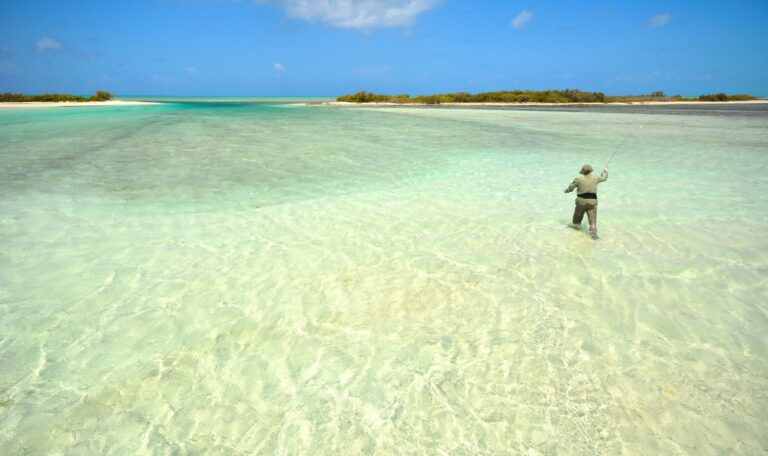
Crooked Island in the Bahamas and Punta Allen in Mexico are two flyfishing locales that inspire both anticipation and awe in anglers worldwide. Crooked Island, remote and largely untouched, unfurls miles of crystalline flats teeming with bonefish. Here, the pursuit is nearly meditative: stalking solitary, silvery shadows in turquoise shallows, all against a tranquil backdrop of whispering casuarina and endless sky. The island’s seclusion ensures pressure on the fishery is minimal, making encounters with double-digit bonefish a real possibility. Tarpon and permit also roam the mangroves, offering variety for adventurous anglers.
Gallery


Punta Allen, nestled at the tip of Mexico’s Sian Ka’an Biosphere Reserve, offers a contrasting yet equally thrilling experience. Its labyrinth of lagoons and flats is famed for the “Grand Slam”—bonefish, tarpon, permit, and snook—in a single day. Local guides pilot panga boats with practiced ease through mangrove mazes, their keen eyes spotting fish invisible to most. Off the water, both destinations enchant with their authentic charm: Crooked Island’s slow Bahamian rhythm and Punta Allen’s sleepy fishing village atmosphere. Combined, they represent the epitome of saltwater flyfishing—untouched nature, challenging quarry, and the promise of adventure on every cast.
FAQs
The core saltwater flats species include bonefish, permit, and tarpon (the classic "Big Three" or "Grand Slam" targets), alongside aggressive game fish like snook, barracuda, and jack crevalle.
It is predominantly a visual, sight-fishing game. Instead of blind casting to river currents, anglers hunt for cruising, tailing, or schooling fish across shallow sand, turtle grass, and mangrove flats from a poling skiff or while wading.
While many species reside on the flats year-round, the prime window runs from February through June and October to November, when winds stabilize, water temperatures warm, and sight-fishing visibility peaks. Late spring also coincides with major migratory runs for larger fish.
Anglers typically carry multi-rod setups: 7–8 weight rods for bonefish and smaller flats species; 9–10 weight rods for permit, juvenile tarpon, and snook; and 11–12 weight rods for adult migratory tarpon. All reels must be fully saltwater-anodized with sealed, high-capacity drag systems and 200–300 yards of backing.
Tropical, weight-forward floating lines with stiff cores that maintain structure in warm weather are standard. Leaders range from 9 to 12 feet in fluorocarbon (12–20 lb test), often paired with heavy shock tippets (40–80 lb) or bite wire for species with abrasive mouths or sharp teeth.
Because flats fish prey heavily on crustaceans and small baitfish, an essential box includes weighted shrimp patterns (Crazy Charlies, Gotchas), realistic crab imitations (Merkin and Raghead styles), and baitfish streamers (Deceivers, Clousers, and Toad patterns).
It is landing a bonefish, a permit, and a tarpon within a single calendar day. Adding a fourth species—typically a snook—elevates the catch to a Super Grand Slam.
Tidal movement dictates when fish can access feeding zones. Incoming tides bring rising water, allowing predators to cruise shallow flats in search of crabs and shrimp, while falling tides push fish back into channels, cuts, and mangrove edges.
High-contrast polarized sunglasses (amber, copper, or green-mirror lenses) are vital for spotting fish through surface glare. Essential personal gear also includes flats wading boots, UPF 50+ sun apparel, a wide-brimmed hat, stripping guards, and a waterproof boat bag.
Yes. Strict catch-and-release is standard practice across guided flats programs to preserve marine habitats, safeguard fragile populations, and maintain quality sportfishing for the future.
Get all the information you need
We are always available to assist you and ready to answer any questions through different channels. You may reach us by phone if you prefer direct conversation with one of our specialists, by email, or through our contact form.